

Stewardship & Planned Giving
Stewardship & Planned Giving
“God has given each of you a gift from his great variety of spiritual gifts. Use them well to serve one another”
(1 Peter 4:10)
Why give to MCC?
Read what some of our members have to say:
"Stewardship involves giving back. We all are warmed by fires we did not build. ]And so providing some 'fuel', whether a stick or a log, helps increase the light this church shines on the world. Being part of the contributing community warms our hearts." --Robin and Paul Geise
“We give, and increase our pledge each year, to fund our staff. Our Pastors, Music Director and Administrative Assistant are excellent. Our historic building is important, but our staff and our congregation make this our spiritual home. If we don't support the Church financially, none of this can happen. “ -- Laurel Butler and Chris Daniels
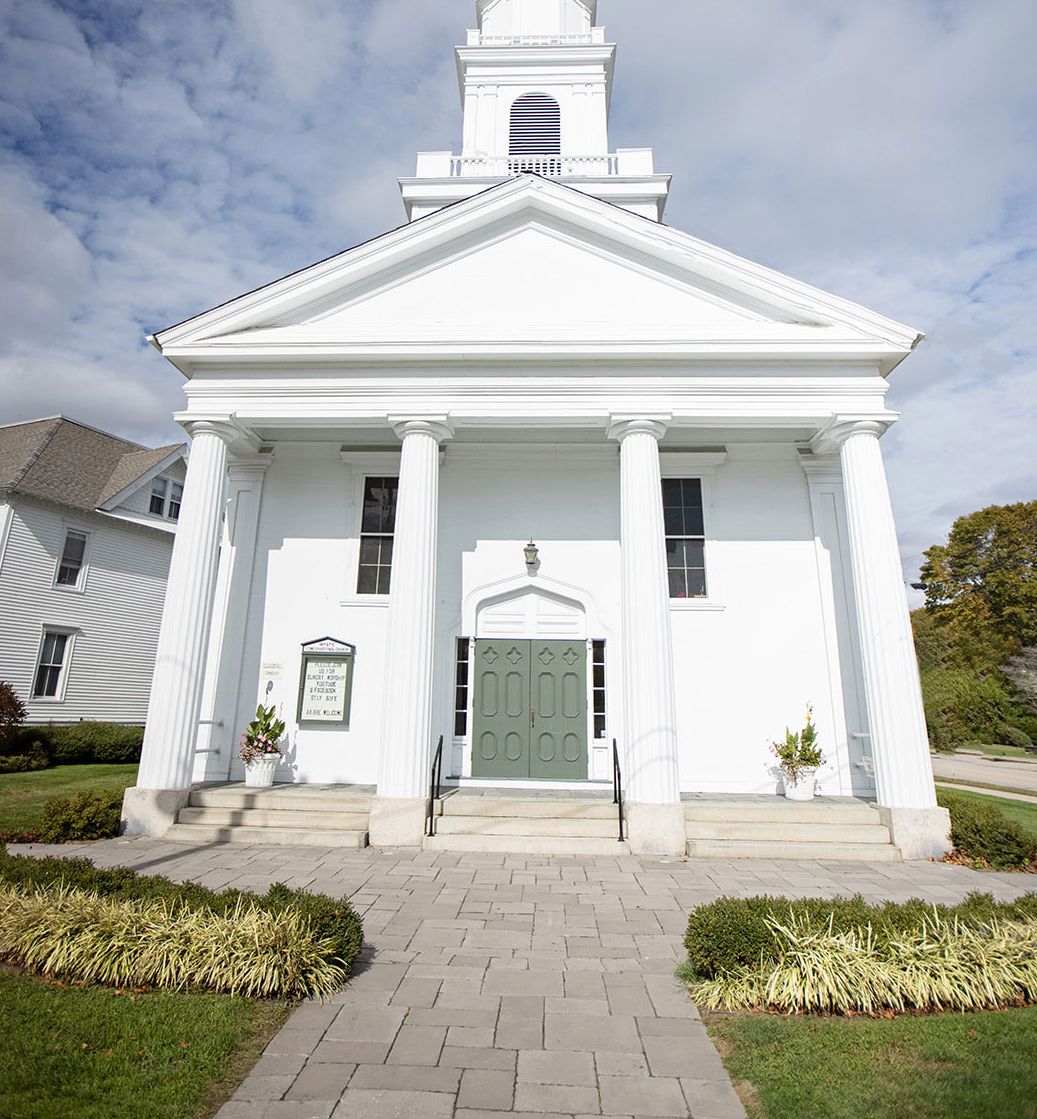
Mystic Congregational Church offers us numerous gifts. For many, our church provides ways to explore our spirituality and to provide connections with God. For others, our church is a strong church family and a community where we can look for support and love. Lastly, our church provides ways we can serve others and work towards a more just world.
Stewardship:
Giving Gifts of Time, Talent and Treasure
Central to our functioning as a member of the Congregational Church is that we are contributors; our faith community does not happen to us or for us, but by us. Every child of God is called to contribute in service to others.
Our Common Commission calls us into action; to contribute:
“Let us go forth into the world in peace, being of good courage, holding fast to that which is good, rendering to no one evil for evil, strengthening the faint hearted, supporting the weak, helping the afflicted, honoring all persons, loving and serving the Lord and rejoicing in the power of the Holy Spirit.”
Congregants contribute by giving in three ways, and each is equally important:
Giving time- helping with our Mission Ministries, our Parish Care Team, serving on a committee, participating in Women's Fellowship and Adult Faith Formation, or assisting with children and youth ministries.
Giving talent- offering counsel, experience, and expertise from your work life to advance the administration of church activities. Identifying your spiritual gifts would be a good first step.
Giving treasure – The financial resources of the church overwhelmingly come from members of the congregation. Giving happens through:
- Weekly offering collection
- fulfilled pledges for the Annual Fund
- donations dedicated for a specific purpose or immediate need
- legacy gifts
Giving, in some ways, is always planned, the timeframes are simply different. Everything we give is part of our stewardship
Gifts Inspired in the moment
If you are enjoying our services, music and outreach programs each week, we hope you will join us in serving God by making a financial contribution to the church collection so we may continue our mission and grow our ministries.
Gifts as an Annual Commitment
Mystic Congregational Church has an annual stewardship drive that seeks pledges from our members and friends to keep our church and ministry thriving. The practicalities of running our church include maintaining the building, employing staff, and implementing programs and ministries to reach the larger community. If making a pledge commitment is new to you, start small and grow with us! Click here for Pledge Card
How Much Should I Give? Giving comes from the heart, and prayer is essential for determining what to give.
This is no small question, and there is no one answer. Biblical tithing is to give 10% of what we have; however, not everyone can give at that level at all times of their lives.
A suggestion is to think of what you have, then what you want to give, save, and spend in that order. As a guide, we suggest between 4% - 10% of your income. If you currently give 4%, can you raise it to 5%, or 6% next year?
Stewardship should be intentional and pledging a habit, but it will be variable as your life and circumstances change. Give what you can joyfully and thankfully. Every gift, however big or small, is a valuable contribution. Whatever you give, we are thankful.
How Can I Give? There are many ways to give back to God what God has so freely given you.
- Check – Send a check, payable to Mystic Congregational Church, to the church at 43 East Main Street, Mystic, CT 06355. If you have one, please include your envelope number in the Memo line of your check, as well as any specific designations (e.g., Pledge, Building Fund, Pastor’s Discretionary Fund).
- Bill Pay - Most banks and credit unions offer online bill payment services. You may set this up as a one-time payment or as periodic payments (weekly, monthly, etc.). No stamps are needed! When you set up your bill payment, enter “Mystic Congregational Church” as the Payee, and 43 East Main Street, Mystic, CT 06355 as the mailing address. Please enter your envelope number in the account section. The check will be sent directly from your bank to MCC.
- Online via PayPal or Credit Card– For those who prefer to give electronically, you can donate securely online through the “Donate” button at the bottom of the page. For this option, the church pays a fee to PayPal of 2.2% of the donation plus $0.30 per transaction. Please consider donating a little extra to cover these fees.
- Donate stock, mutual fund, or ETF (exchange traded fund)
- Donate from a Donor-Advised Fund, which is a charitable giving account, such as PayPal Giving Charity, Fidelity Charitable or Vanguard Charitable.
- Donate a Required Minimum Distribution (RMD) from an Individual Retirement Account (IRA)
- Required minimum distributions (RMDs) are the minimum amounts you must withdraw from your retirement accounts each year. You generally must start taking withdrawals from your traditional IRA, SEP IRA, SIMPLE IRA, and retirement plan accounts when you reach age 73 for individuals born prior to 1960. In 2026, anyone age 701/2
If you would like more information about these donation options, please contact Jack Leary or Keith Covin email: treasurer@mysticucc.org
Mystic Congregational Church is recognized by the IRS as a Section 501(c)(3) nonprofit organization. Your gifts may qualify as a charitable deduction for federal income tax purposes. Consult with your tax advisor or the IRS to determine if your contributions are deductible.
Gifts as Planned Giving: The Eternal Legacy
Continue the work of the church through your legacy.
At the end of your life, your final pledge may be one of the most significant gifts you make, as a way to advance the work of the church through your legacy. Talk with your financial advisor as you consider how much you should give.
Each of us will die and leave all that we have behind. At the end of your life, your final pledge may be one of the most significant gifts you make, a way to advance the work of the church through your legacy. Planning now is prudent; talk with your financial advisor as you consider how and how much you should give.
Below is more detailed information regarding Planning Giving for your prayerful consideration. For further assistance from Mystic Congregational Church, please email our Treasurer, at treasurer@mysticucc.org
What is a Planned Gift?
Planned gifts are prayerfully prepared during the donor’s lifetime but not realized by the beneficiary until the donor’s death. A planned gift is an expression of your family’s and your values as well as your commitment to Christian stewardship. Leaving a legacy gift helps what matters most to you endure.
There are gifts that pay you income in retirement, and gifts that help reduce or avoid income and estate taxes. How you make your gift is important but more important is the fact that your planned gift meets your personal, financial and charitable goals.
Planned gifts are a wonderful way to create a meaningful legacy for you and your family. And while a planned gift does not require great wealth, it is always a win for you and a win for the church and its ministry.
Look below to learn more about different ways to make a planned gift(s).
Types of Planned Gifts
- Real estate: Donors may want to give real estate to benefit from the large tax break they can receive. When receiving property through an estate plan, your organization must know about any liens, environmental hazards, other landowners, insurance requirements, and maintenance needed before accepting the donation.
- Charitable lead trusts: A common way to receive revenue right away from a planned gift program is through a charitable lead trust. The charity gets payments from the trust during the donor’s lifetime and other non-charity individuals, most often the donor’s heirs, receive the remaining income at the end of the trust.
- Appreciated securities: Appreciated securities are an excellent way to get the largest tax break for a donation. The donor can claim the total amount the stock was sold for on their taxes even if they purchased it at a lower price.
- Retirement plans: When individuals reach 70 ½ years old, the IRS requires them to withdraw a certain percentage from their IRA (Individual Retirement Account) or 401K every year. Each withdrawal is taxed. In 2018, a new tax law was passed that allows people to give up to $15,000 as an individual or $30,000 as a couple without paying taxes
- Bequests: Donors leave a specified amount to a charity in their will, and charities will receive the full amount in the event of their death. It is not rare for nonprofits to be unaware of this gift until they’ve received one.
- Life insurance: Most individuals purchase a life insurance policy for the sake of their family, but donors can also leave this policy or part of this policy to their favorite charity.
- Charitable remainder trusts: Split interest gifts, like a charitable remainder trust, can be complicated and require financial and legal professionals to help your organization and donor finalize the details. These gifts provide someone like the Church with a donation in the future and regular investment payments for the donor during their retirement. The benefit of this type of planned gift is obvious and provides a fantastic retirement income for the donor.